Hi, I’m Phoebe.
Hi, I’m Phoebe.
But how will I be remembered?


Themes: co-design, community archive, storytelling, adoption narratives
London, United Kingdom, Fall 2025
This project, in completion for my MA thesis is a prototype for a community-led digital archive created through my own search for agency and belonging as a Chinese adoptee. The work began by confronting the gap between instituionalised records and lived experience, mediated through state documentation, redaction, and loss. Out of this encounter grew a collective design process with adoptees who continue to question how they are remembered, represented, and recorded.
The title echoes a question left in a TikTok comment by a Chinese adoptee in the wake of recent policy changes suspending international adoption from China. It is both a plea and a provocation, asking what remains of us when our history is missing, altered, or never written at all. The prototype reimagines the archive as a space for agency and participation, where adoptees reclaim the authority to write, share, and preserve their own stories beyond bureaucratic control.
London, United Kingdom, Fall 2025
This project, in completion for my MA thesis is a prototype for a community-led digital archive created through my own search for agency and belonging as a Chinese adoptee. The work began by confronting the gap between instituionalised records and lived experience, mediated through state documentation, redaction, and loss. Out of this encounter grew a collective design process with adoptees who continue to question how they are remembered, represented, and recorded.
The title echoes a question left in a TikTok comment by a Chinese adoptee in the wake of recent policy changes suspending international adoption from China. It is both a plea and a provocation, asking what remains of us when our history is missing, altered, or never written at all. The prototype reimagines the archive as a space for agency and participation, where adoptees reclaim the authority to write, share, and preserve their own stories beyond bureaucratic control.
<CODING COLONIES/>
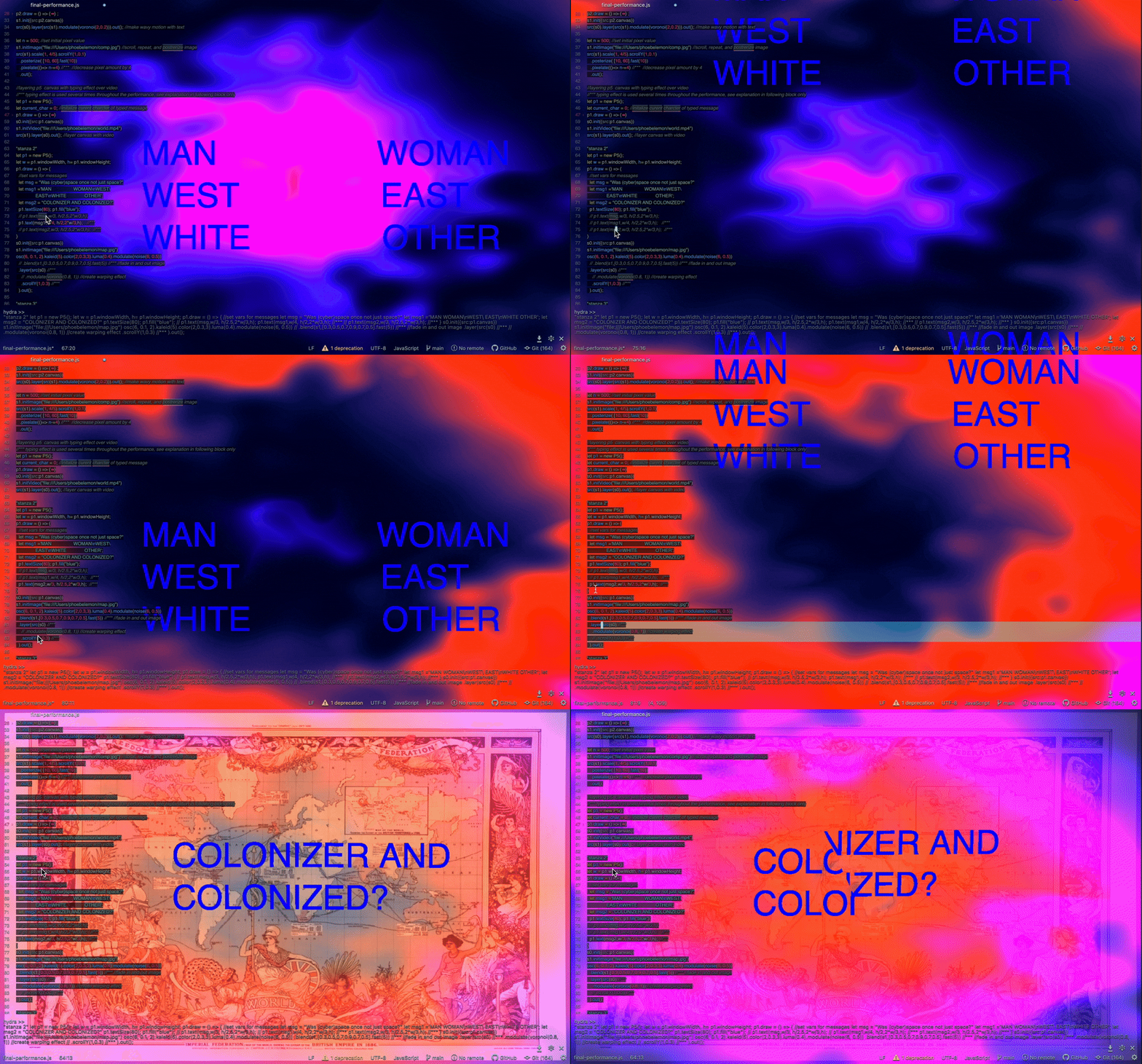
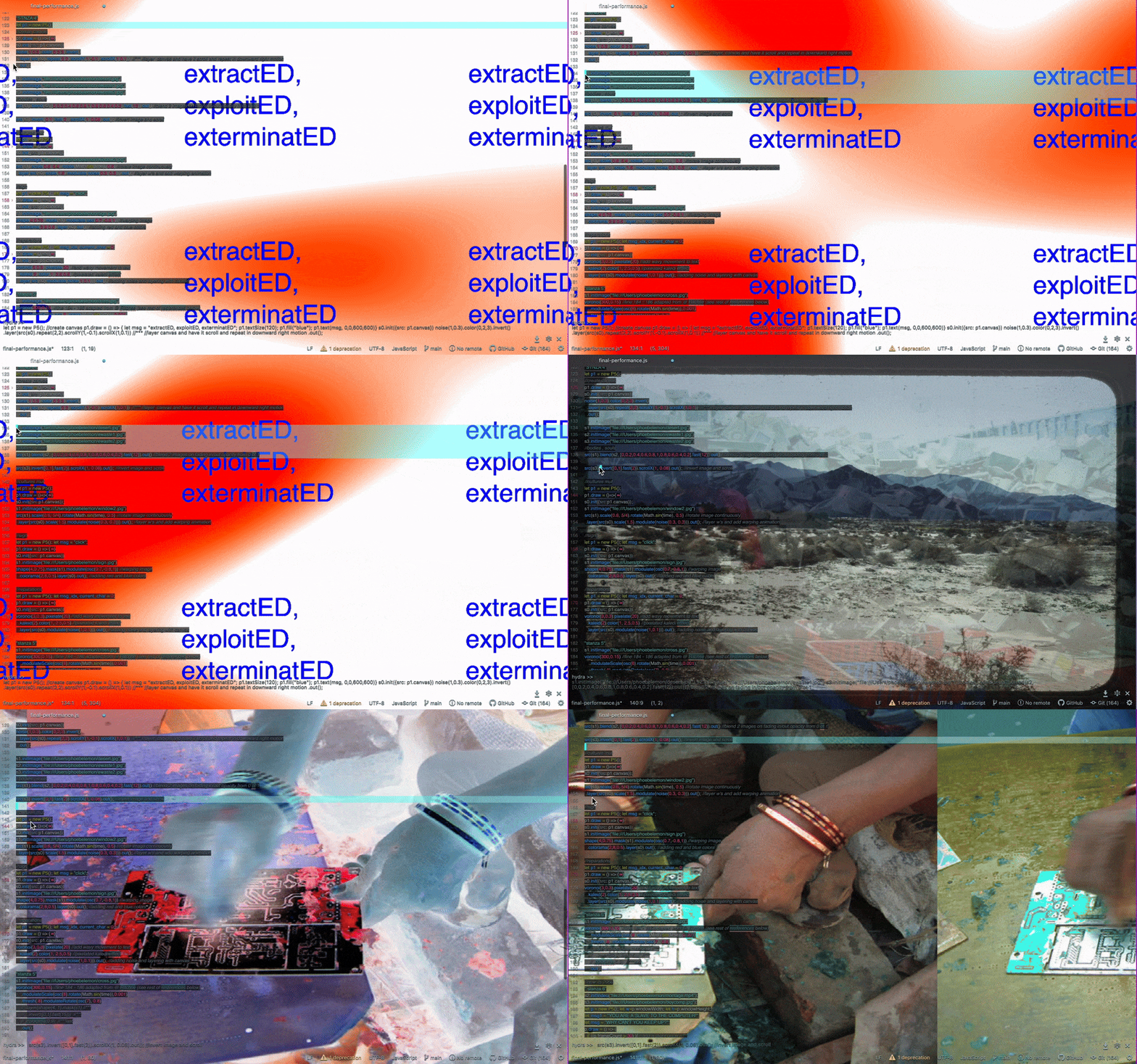
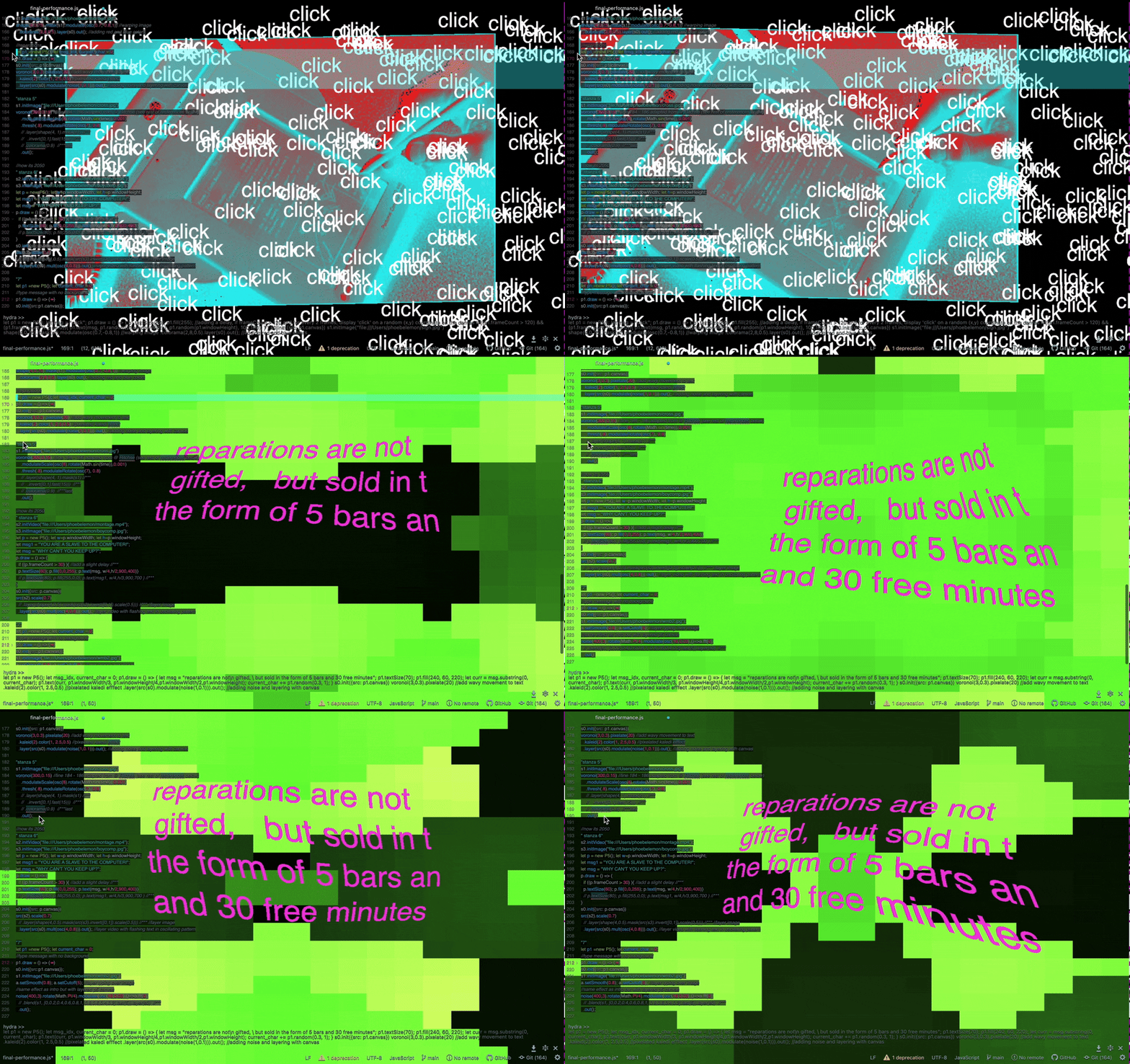
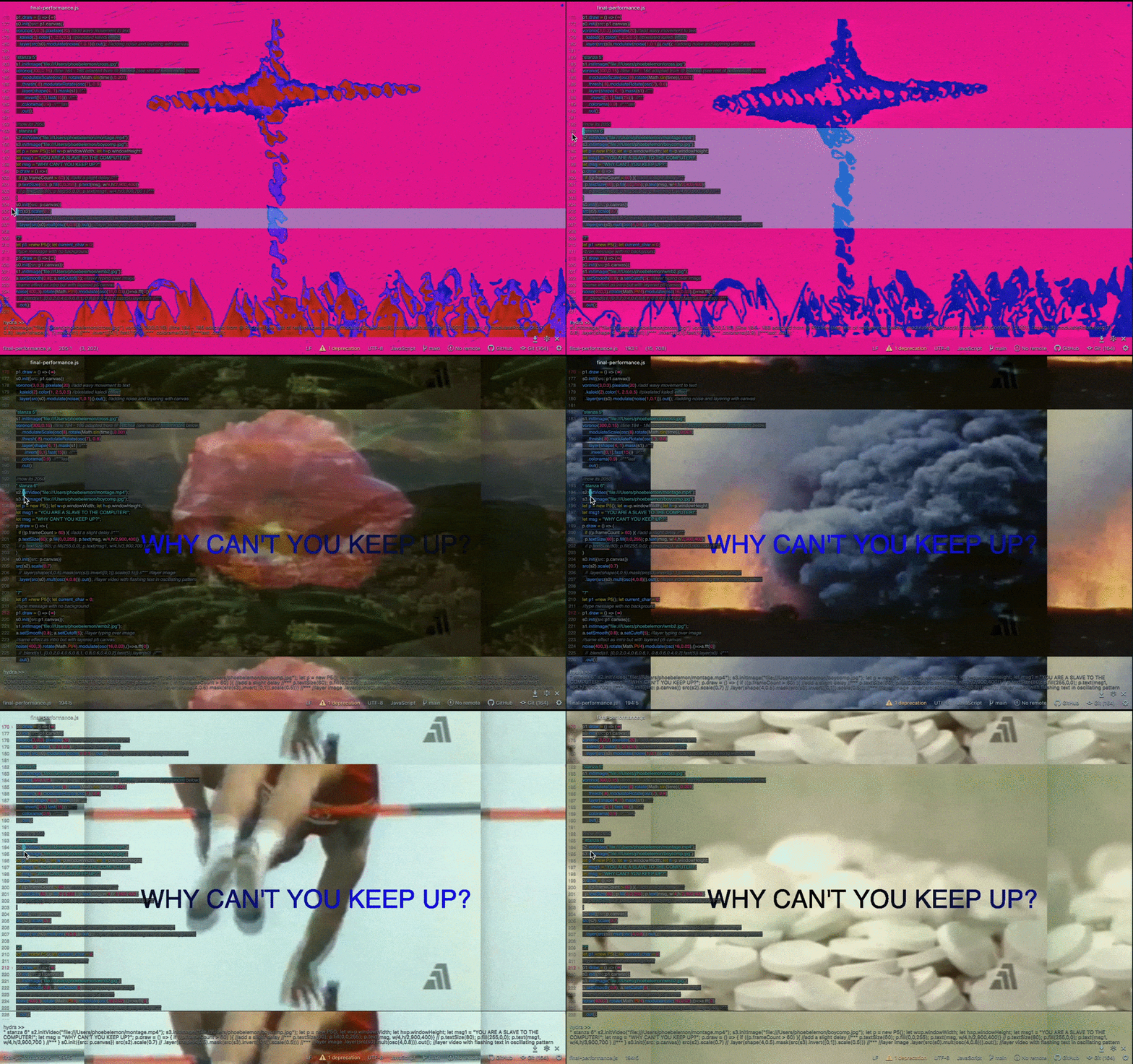
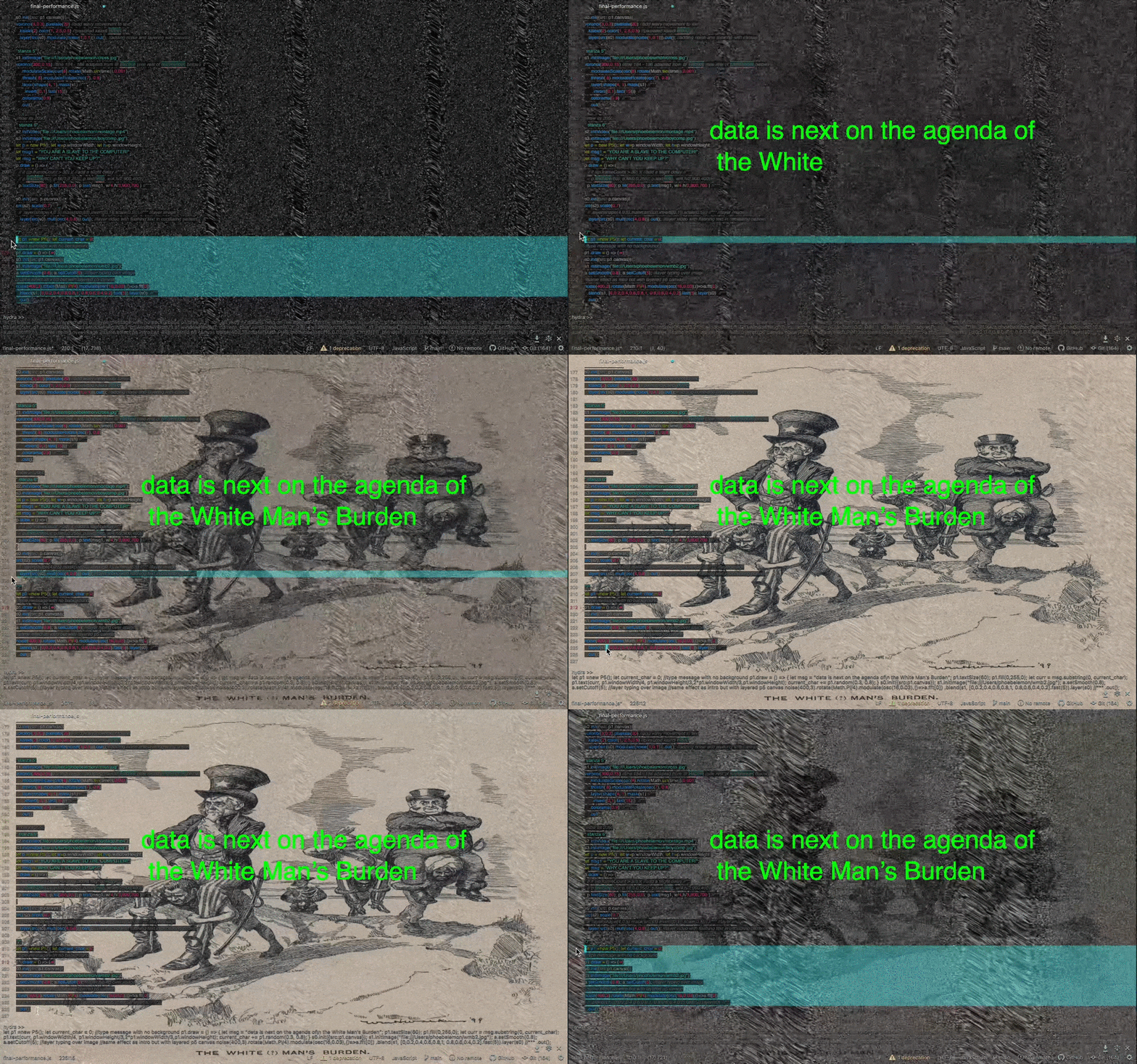
Themes: Live coding, performance, decolonization, data
London, United Kingdom, Fall 2024
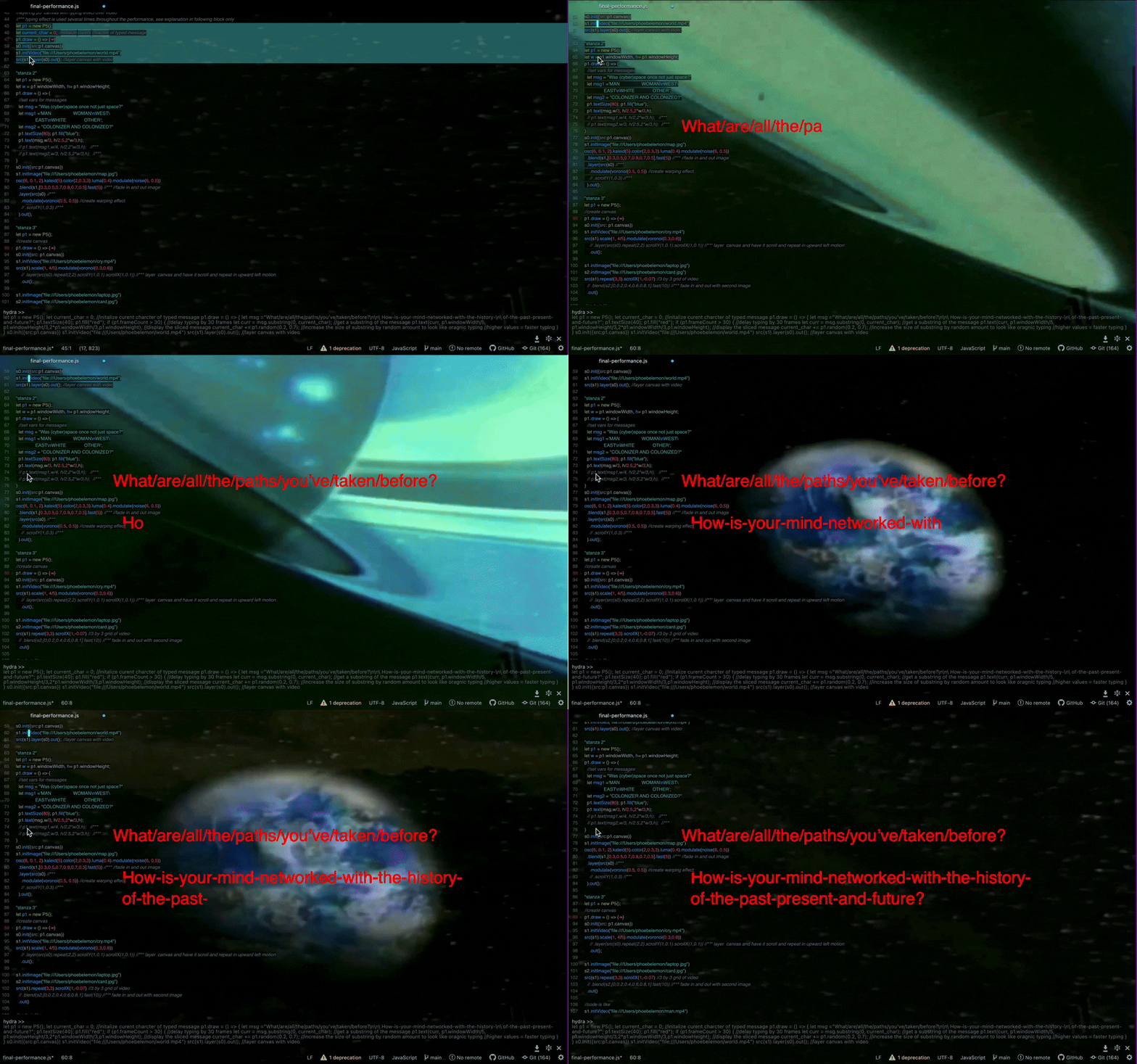
‘Coding ‘Colonies’ is a live coding performance that acts as an extension of previous research, where I examine the internet and media technologies as embodiments of digital colonialism. Through this framework, modes of extraction, exploitation, and appropriation between the West and the global South have worked closely with the development of technology; the age of colonialism has not been erased but merely transformed and codified through embodied processes and procedures by emerging technologies. This performance then, aims to highlight the legacy of colonialism across time and (cyber)space, and to shed a light on how it fixates roles within the tech space across race, class, and gender, defining a ‘digitized’, ‘innovative,’ ‘modern’ West that both subjugates and relies on ‘pre-digital’, ‘technologically illiterate’, and ‘primitive’ global South.
Performance Video
London, United Kingdom, Fall 2024
‘Coding ‘Colonies’ is a live coding performance that acts as an extension of previous research, where I examine the internet and media technologies as embodiments of digital colonialism. Through this framework, modes of extraction, exploitation, and appropriation between the West and the global South have worked closely with the development of technology; the age of colonialism has not been erased but merely transformed and codified through embodied processes and procedures by emerging technologies. This performance then, aims to highlight the legacy of colonialism across time and (cyber)space, and to shed a light on how it fixates roles within the tech space across race, class, and gender, defining a ‘digitized’, ‘innovative,’ ‘modern’ West that both subjugates and relies on ‘pre-digital’, ‘technologically illiterate’, and ‘primitive’ global South.
Performance Video
CIVILIZED BODIES

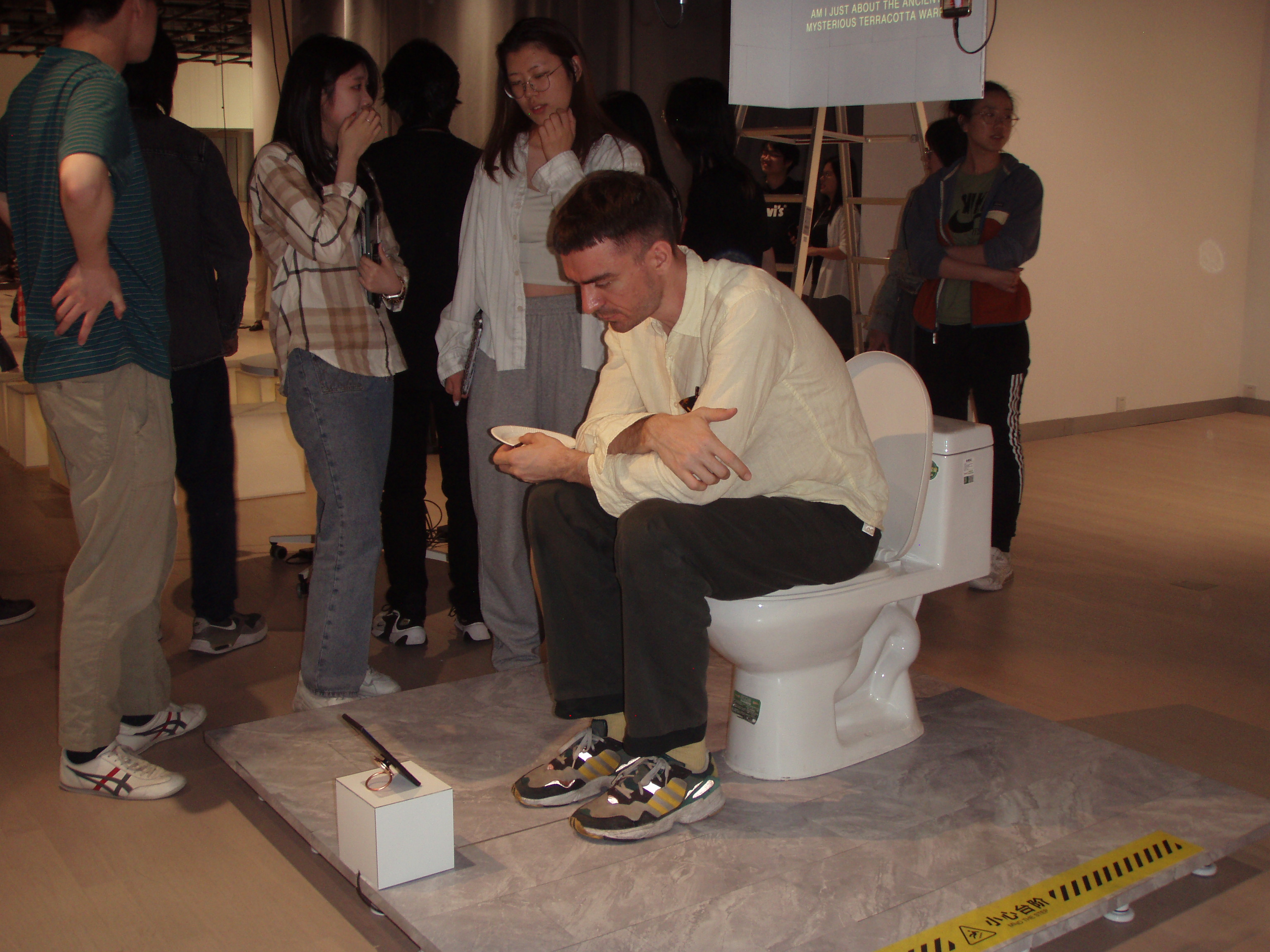
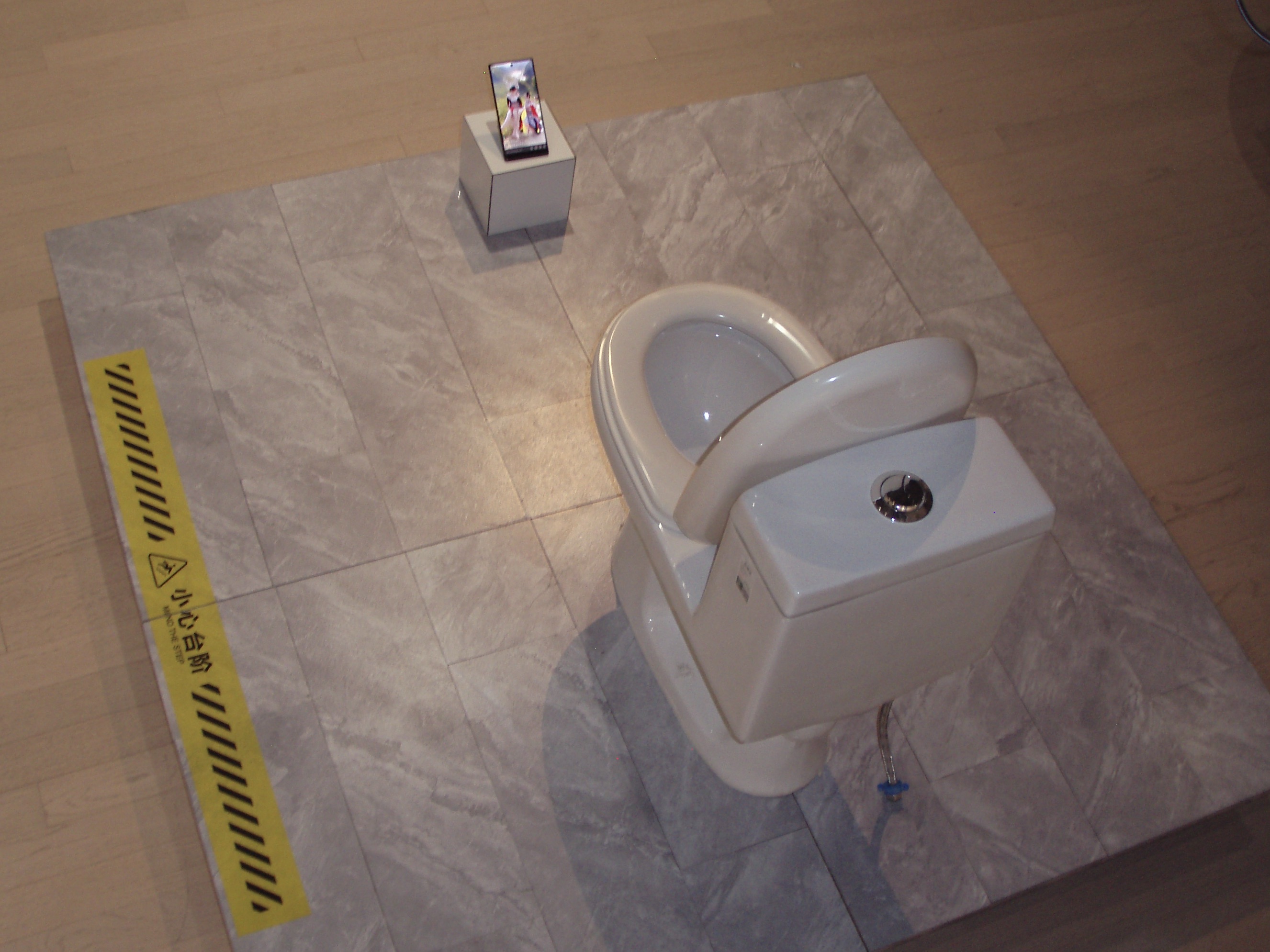
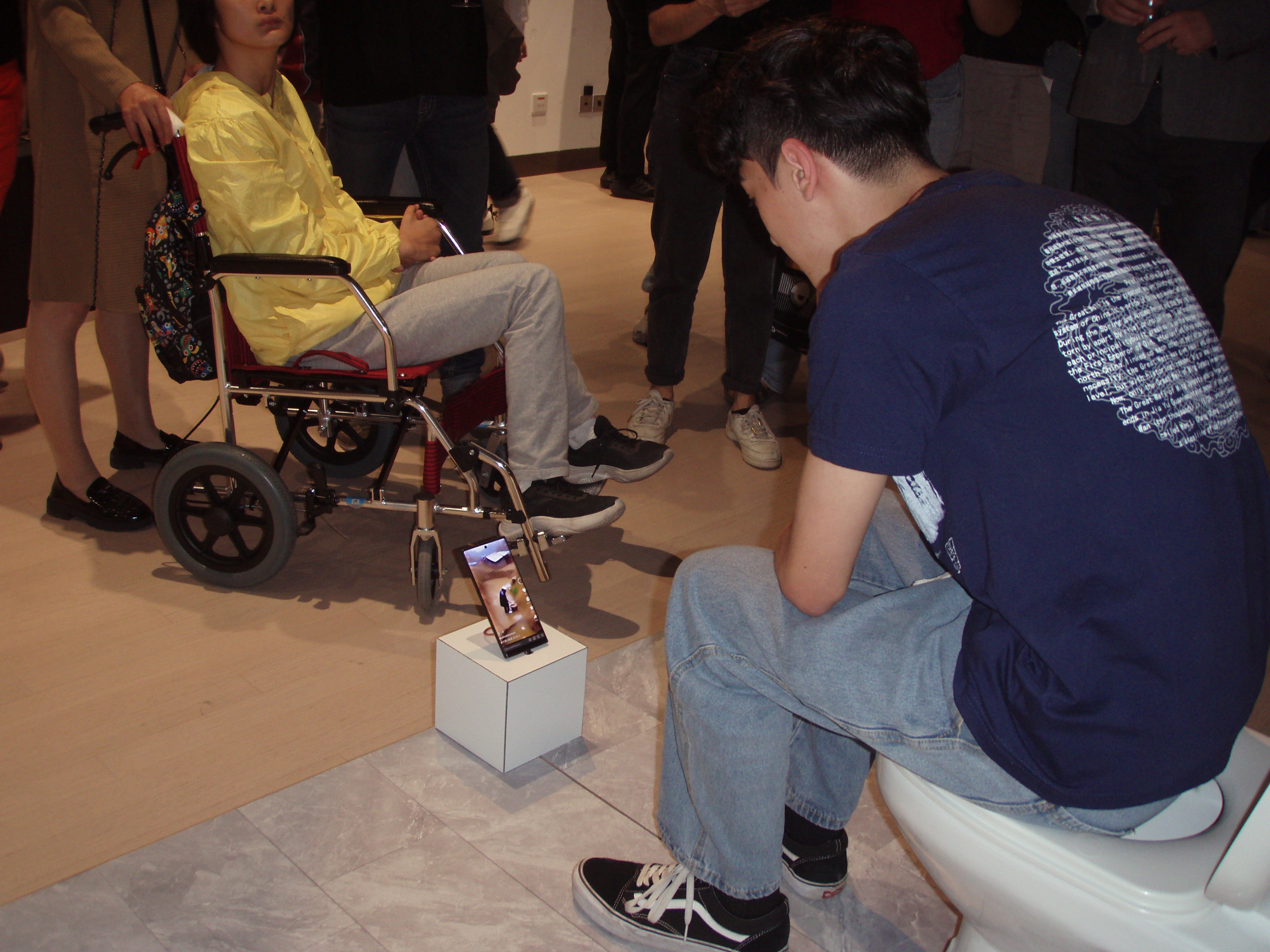
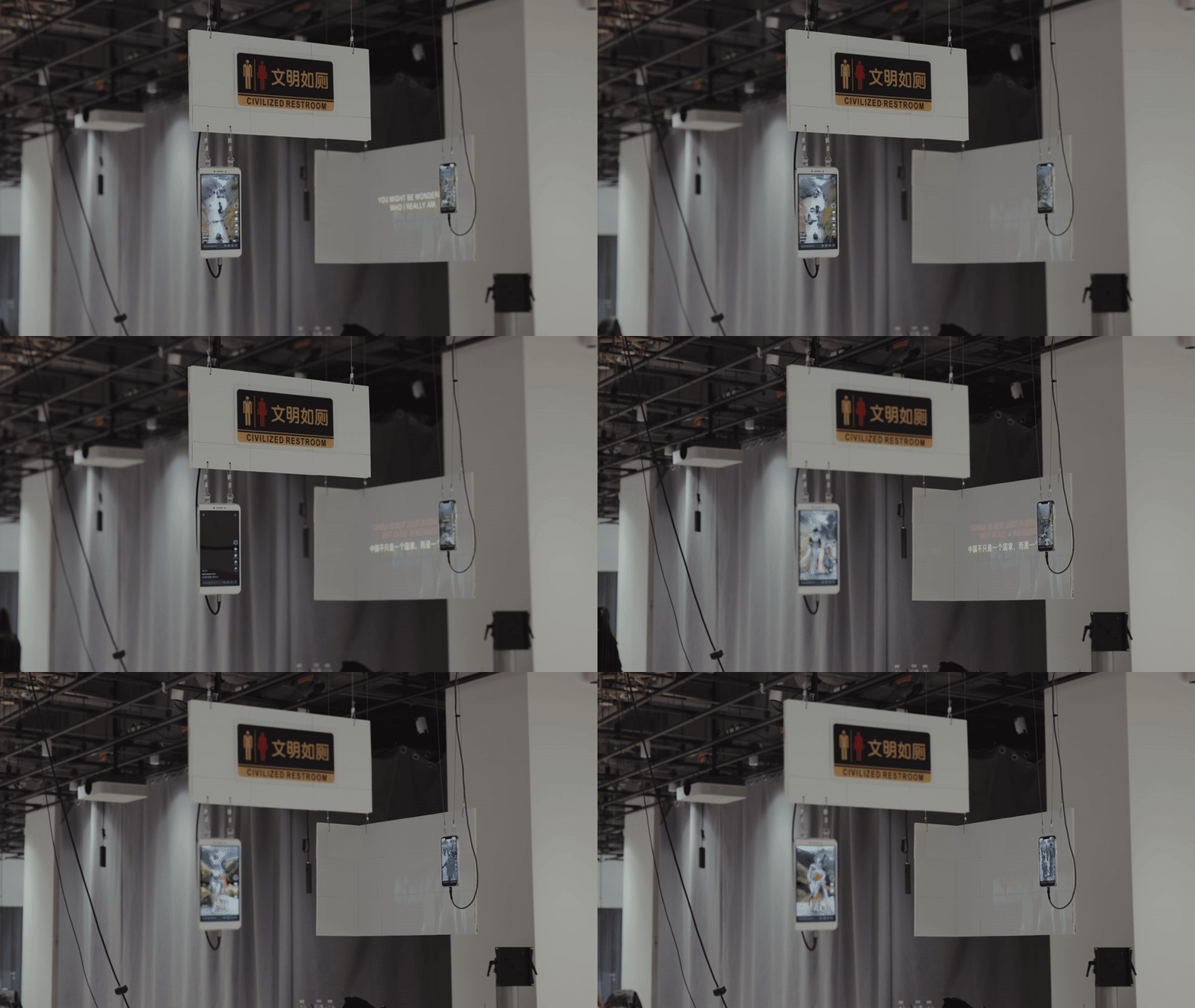
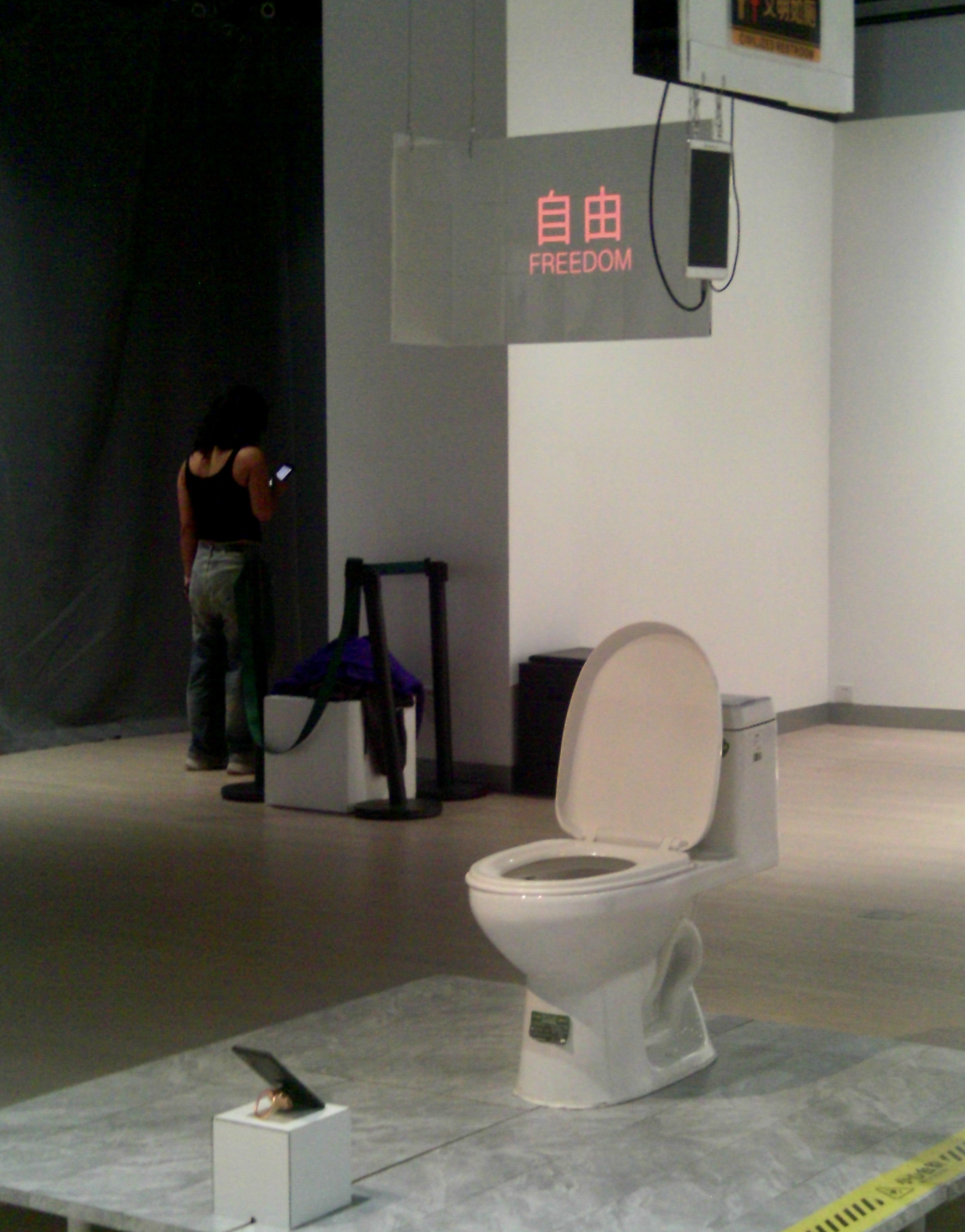
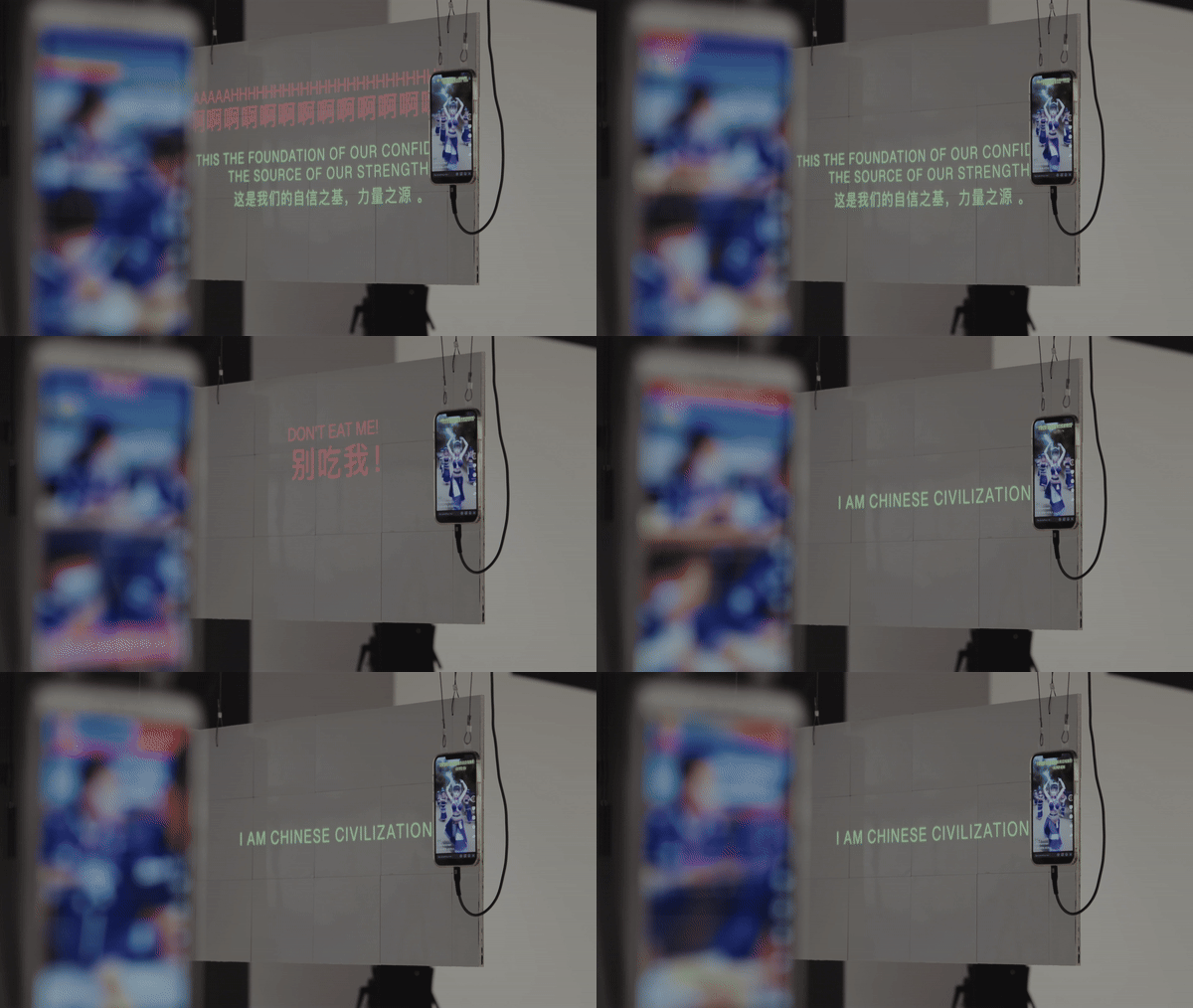
Themes: Audiovisual installation, sound art, machine learning, Chinese politics and history
Shanghai, China, Spring 2024
This audiovisual installation investigates Wenming (文明), which translates to ‘civilization,’ ‘civilized,’ or ‘culture,’ as the interplay between identity, ethnicity, and digital space. While Wenming is often found in street signs, propaganda, and policy in the context of constructing a civilization by economic and technological means, I highlight how social media platforms like Kuaishou, through their visual, auditory, and textual icoonography, reft a corporeal dimension of the term, acting as sites for constructing ethnic identity and cultural authenticity. My building of the public restroom, a pinnacle of Wenming in modern urban space, combines a phsyical elements y with re-imagined Kuaishou videos generated through machine learning and a soundscape of layered real Kuaishou audios. Emulating the corpeal vulnerability of using the toilet, the installation aims to show how Wenming moves though on and offline structures of power, oppression, and identity, fixang not “what” is civilized, but “who”.
Full documentation
Shanghai, China, Spring 2024
This audiovisual installation investigates Wenming (文明), which translates to ‘civilization,’ ‘civilized,’ or ‘culture,’ as the interplay between identity, ethnicity, and digital space. While Wenming is often found in street signs, propaganda, and policy in the context of constructing a civilization by economic and technological means, I highlight how social media platforms like Kuaishou, through their visual, auditory, and textual icoonography, reft a corporeal dimension of the term, acting as sites for constructing ethnic identity and cultural authenticity. My building of the public restroom, a pinnacle of Wenming in modern urban space, combines a phsyical elements y with re-imagined Kuaishou videos generated through machine learning and a soundscape of layered real Kuaishou audios. Emulating the corpeal vulnerability of using the toilet, the installation aims to show how Wenming moves though on and offline structures of power, oppression, and identity, fixang not “what” is civilized, but “who”.
Full documentation
MEMORY: FORGETTING HERITAGE, REMEMBERING CHILDHOOD, & IMAGINING NOSTALGIA IN CHINESE ADOPTION

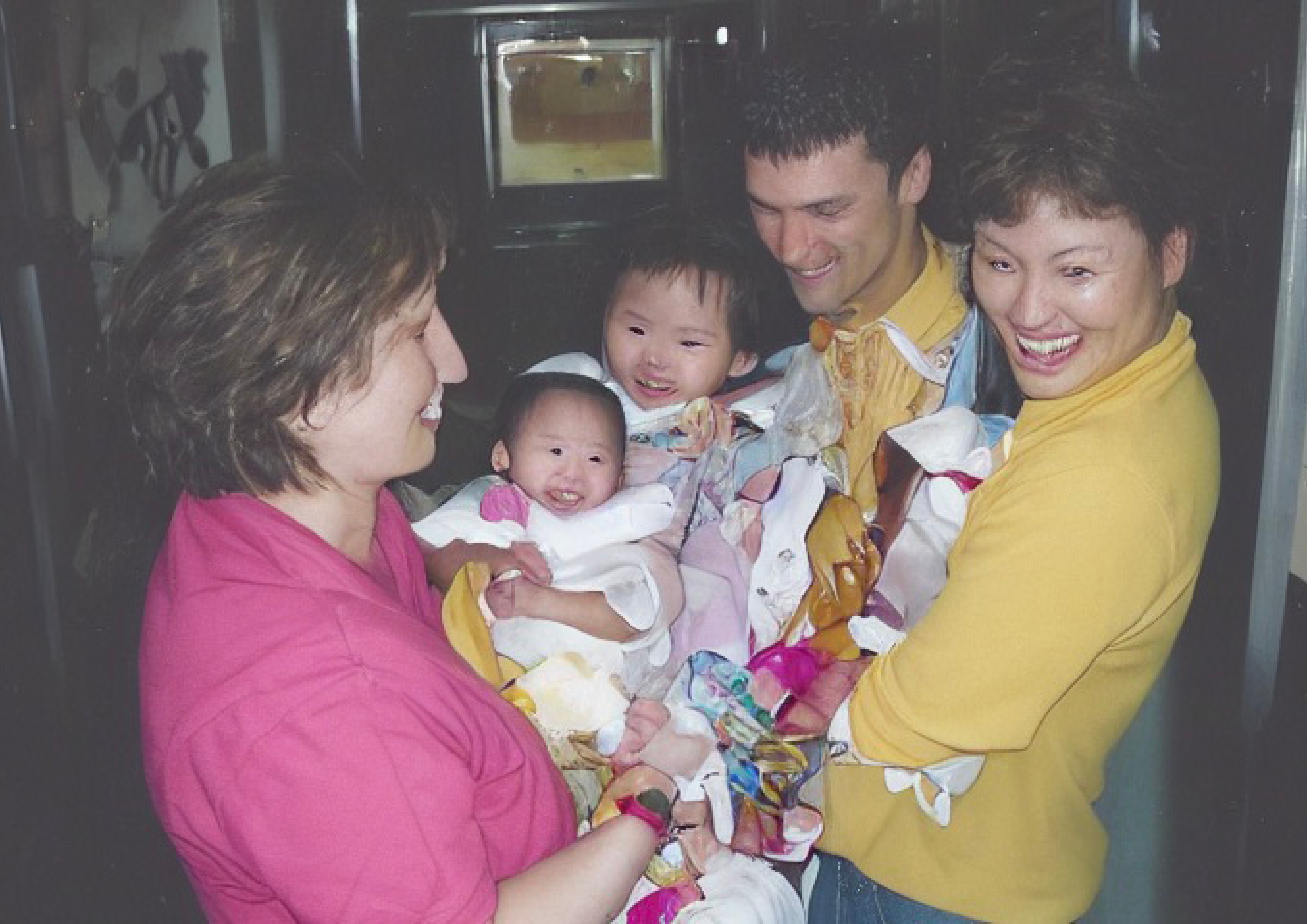
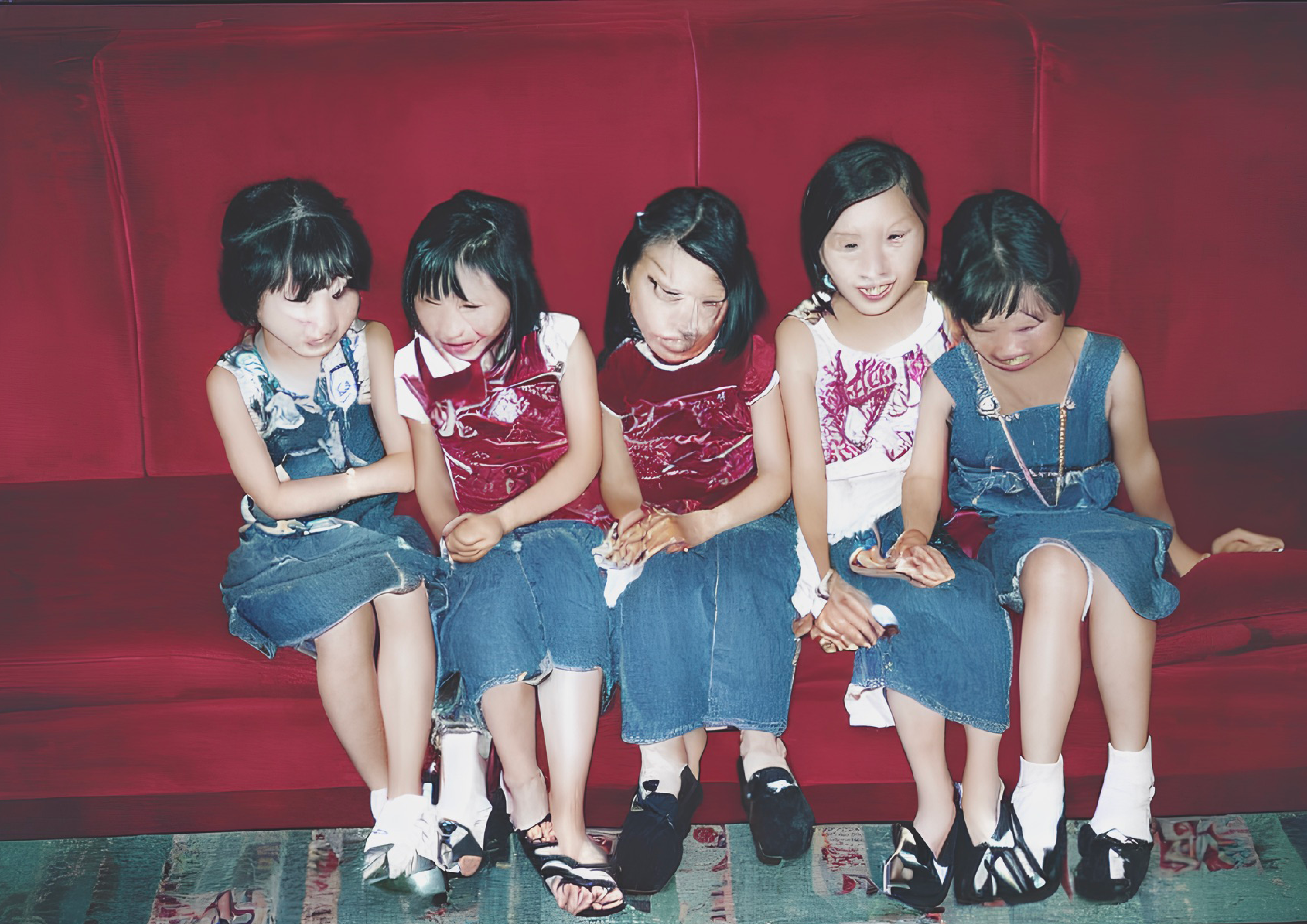
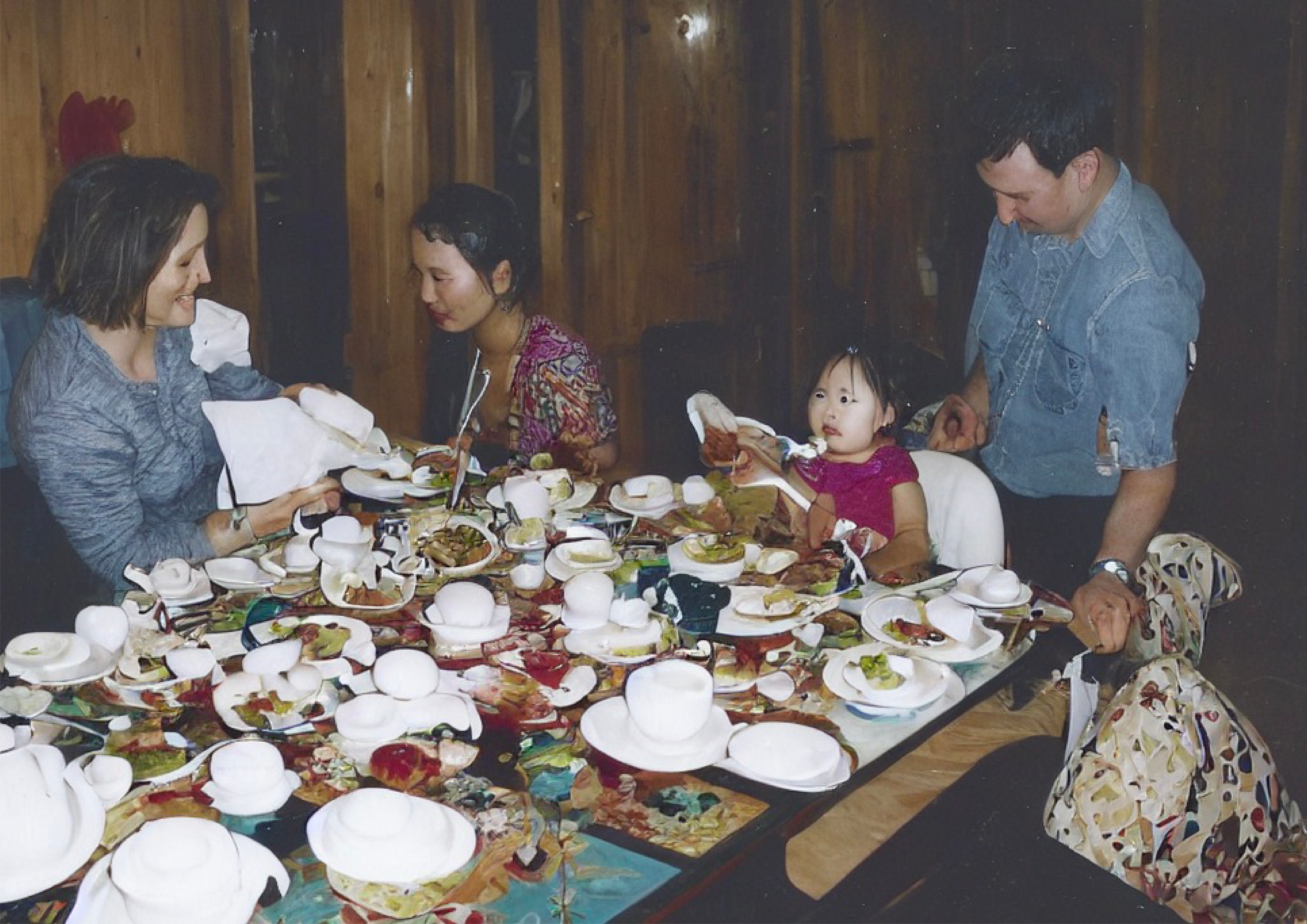
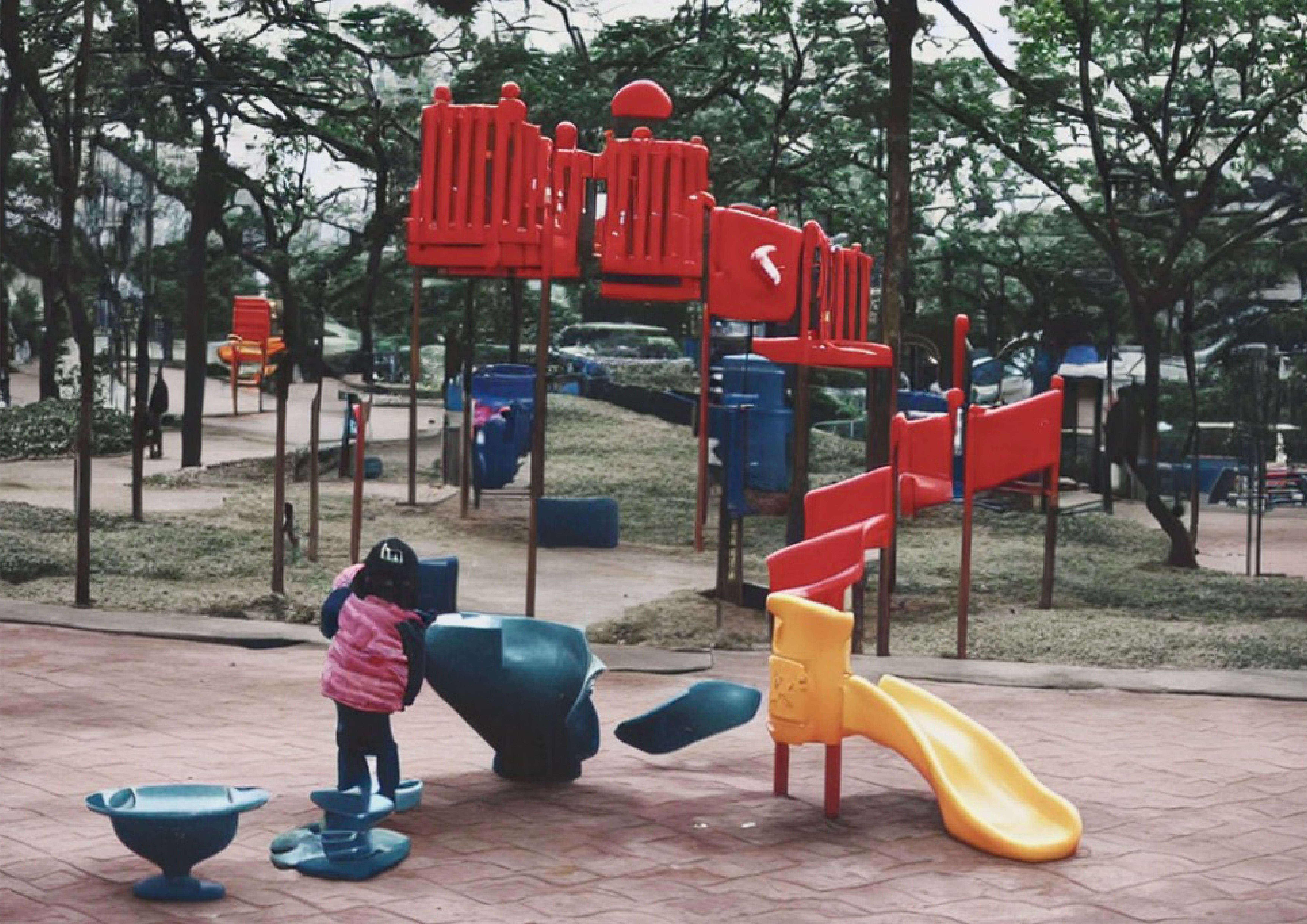
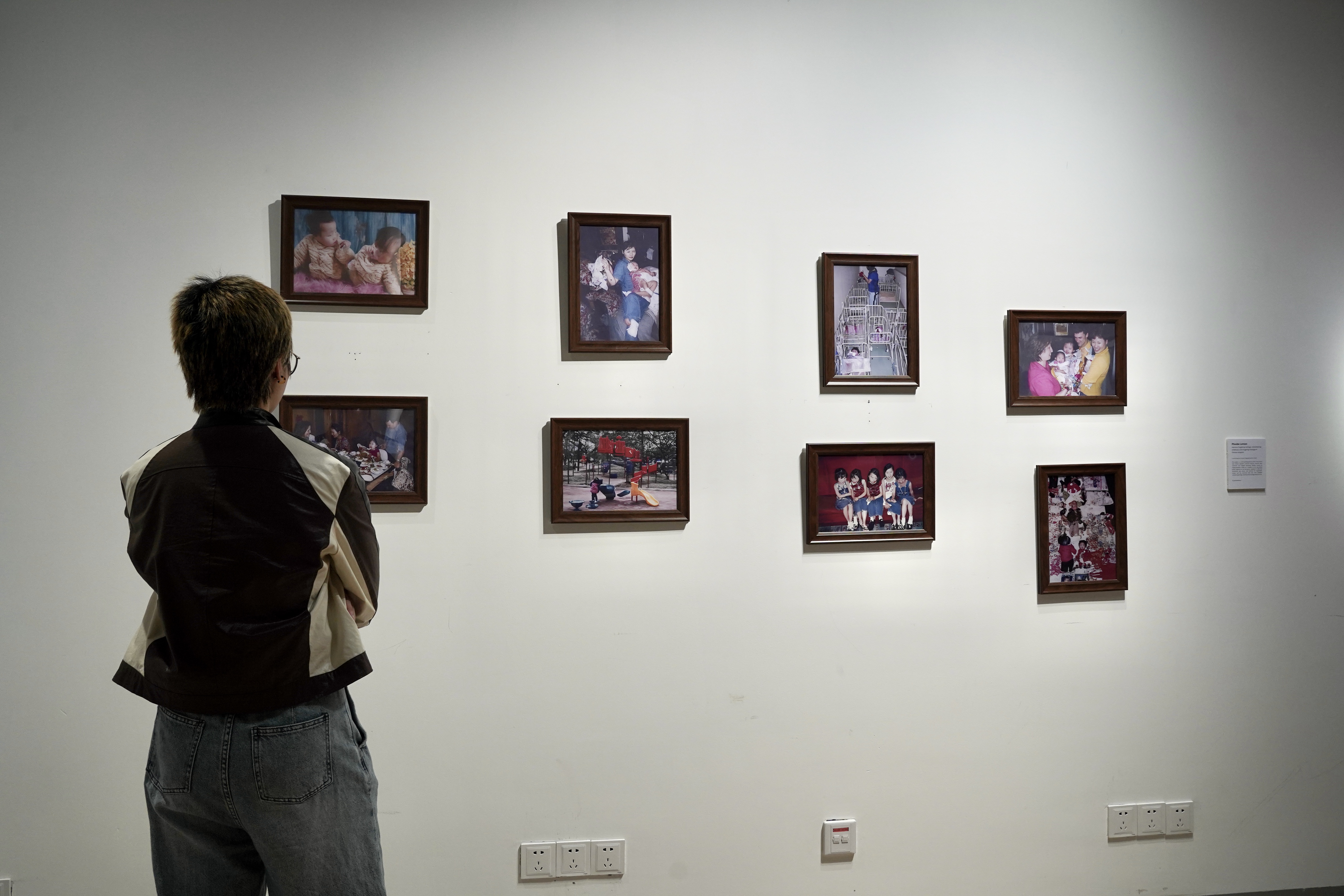
Sometimes, memories come back to me in dreams. Other times, dreams come back to me in memory.
Themes : memory, Chinese adoption, machine learning
Shanghai, China, Fall 2023
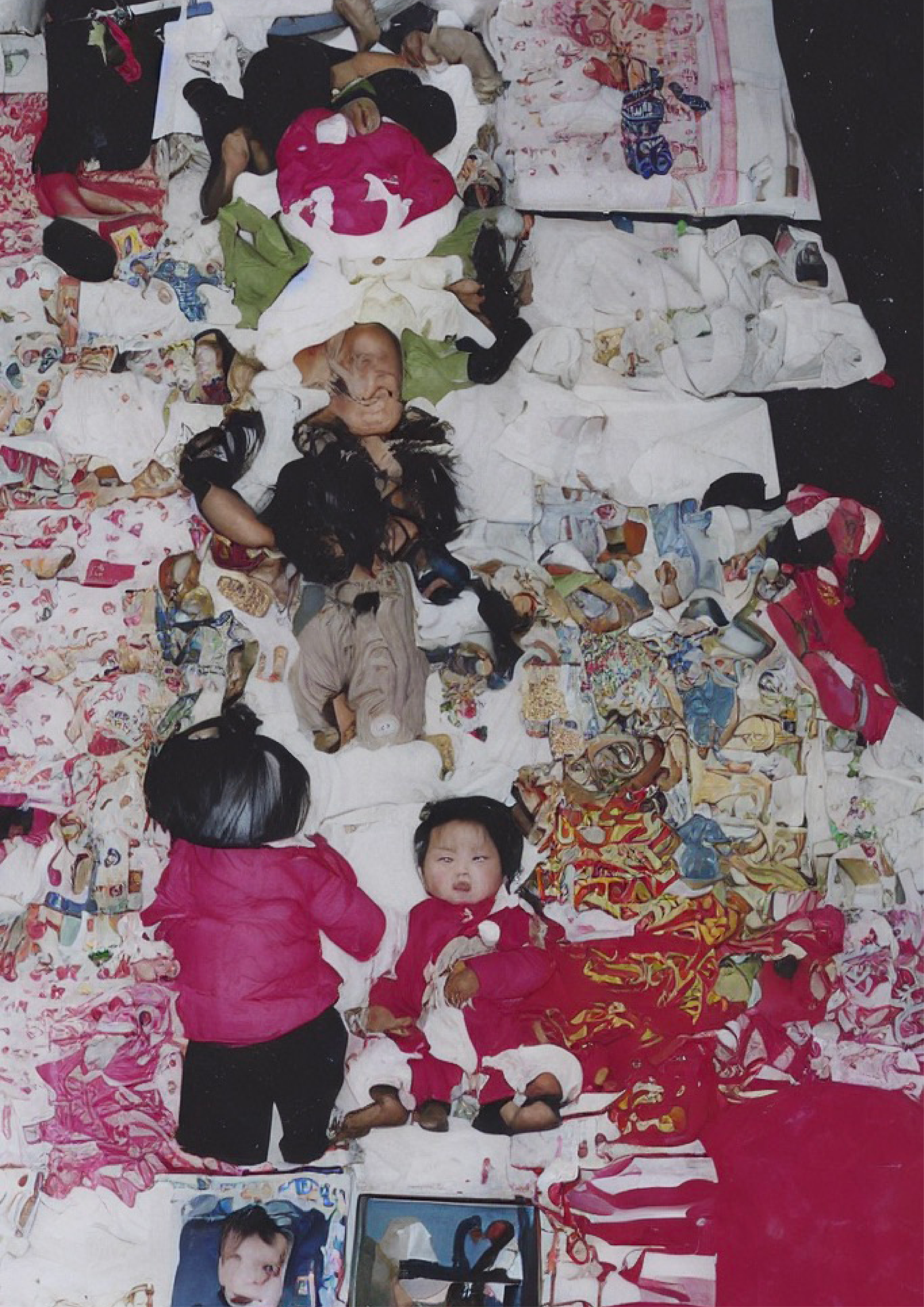
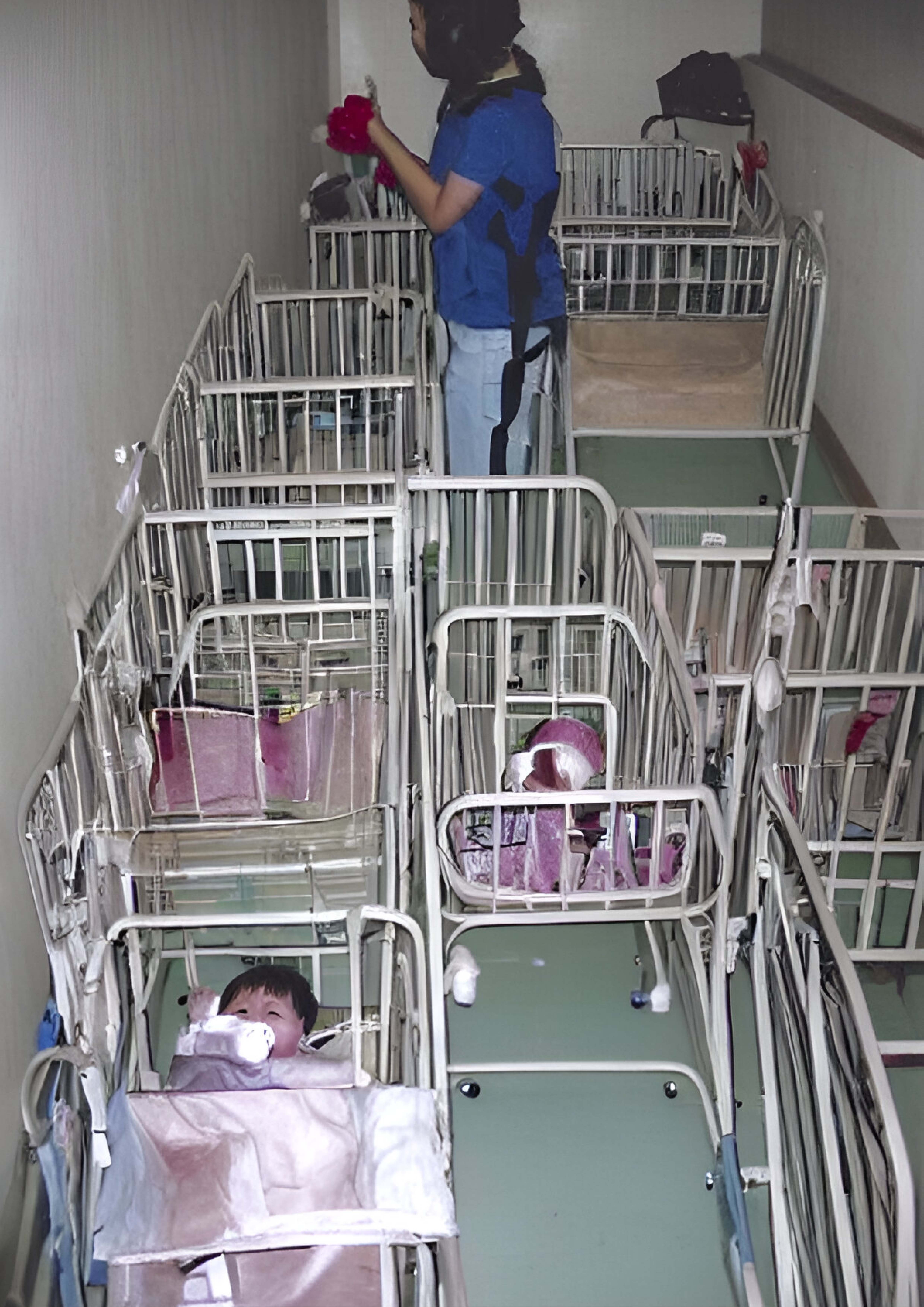
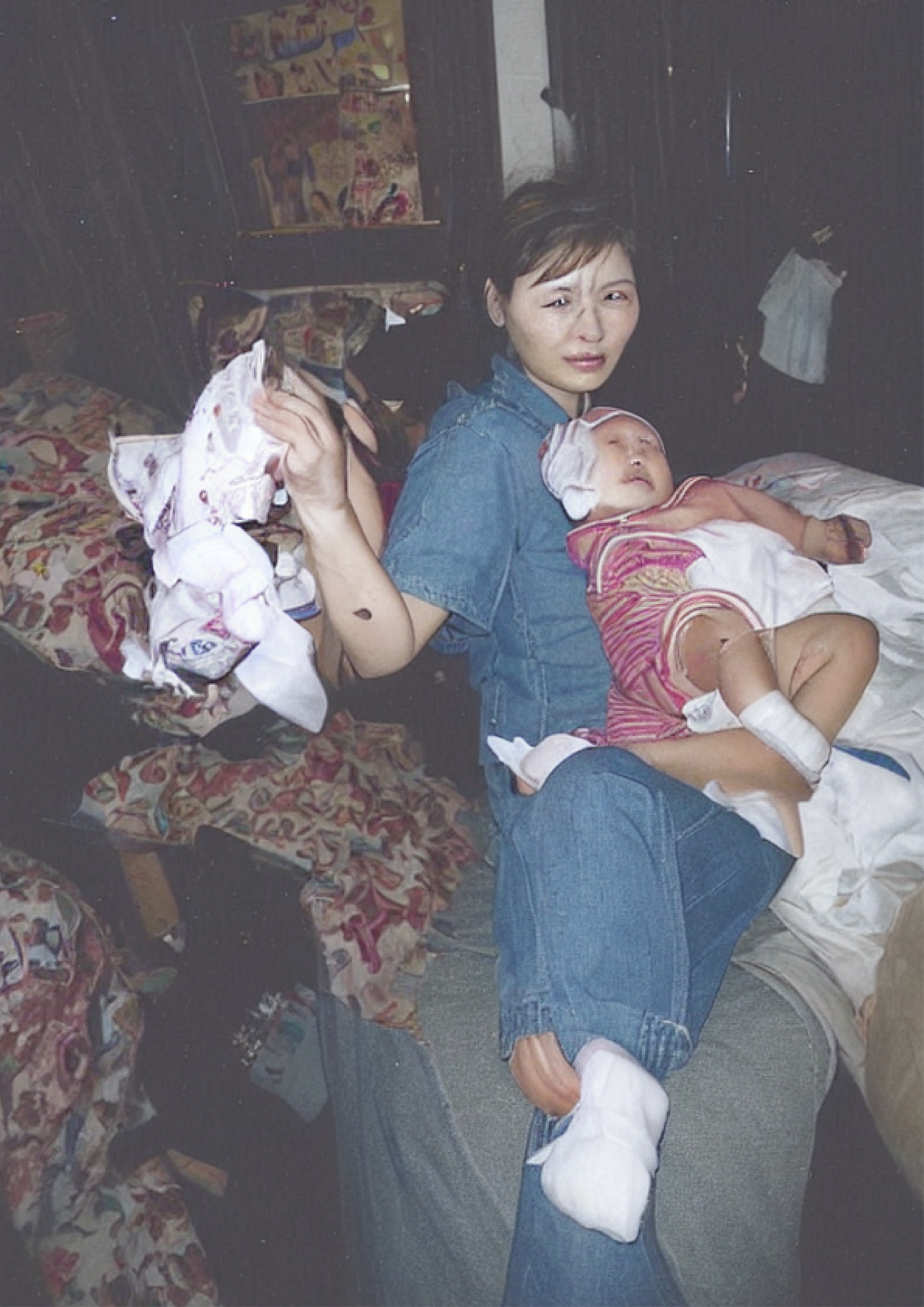
This project is an autobiographical photo essay reflective upon how Chinese adoptees construct memory, recount early childhood, and imagine becoming. I trained an image-generation model on a dataset of my own family photos captured on film during my family’s adoption trip in 2003. I then synthesized new photos that embody the fragmented, broken, and lost memories that arise from adoptees' often turbulent beginnings, rewriting what nostalgia means for me.
Full documentation
![]()
![]()
![]()
Shanghai, China, Fall 2023
This project is an autobiographical photo essay reflective upon how Chinese adoptees construct memory, recount early childhood, and imagine becoming. I trained an image-generation model on a dataset of my own family photos captured on film during my family’s adoption trip in 2003. I then synthesized new photos that embody the fragmented, broken, and lost memories that arise from adoptees' often turbulent beginnings, rewriting what nostalgia means for me.
Full documentation